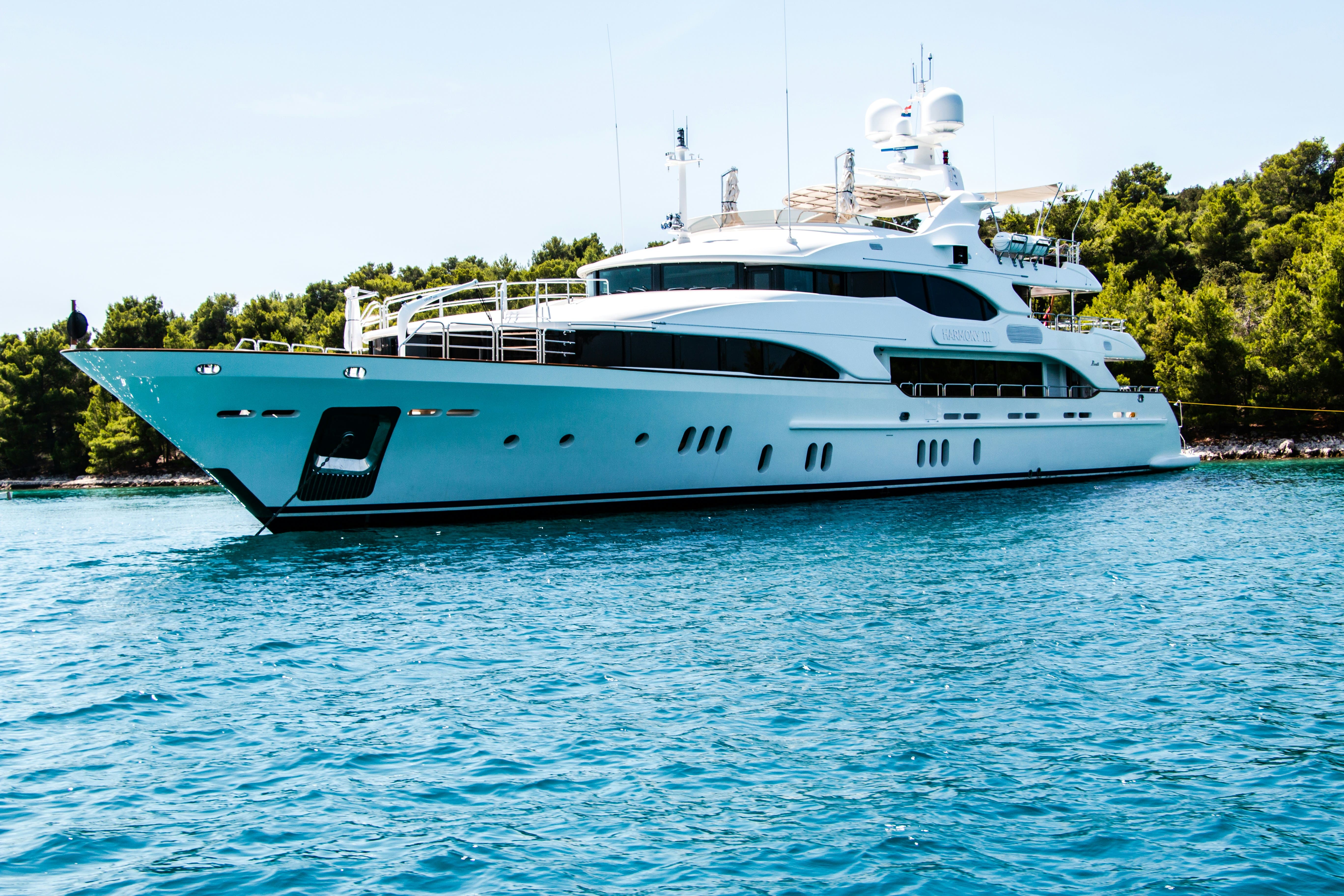
The Waters Are Changing. Can Open-Loop Scrubbers Keep Up?

A lot can change in six years.
ECA zones are expanding. Washwater discharge restrictions are following. A technology that once had full regulatory backing is now losing usable waters with each new restriction cycle.
So at what point does the compliance calculation change?
Dr Dan Clarke examines where open-loop scrubbers stand, and what operators weighing their next move should be asking.
- Dr. Dan Clarke
- Independent Consultant, Science & Technology
The Waters Are Changing. Can Open-Loop Scrubbers Keep Up?
Author: Dr Dan Clarke - Independent Consultant, Science & Technology
Are we at a Regulatory Turning Point?
ECA zones are expanding, and washwater discharge restrictions with them. For open-loop operators, that means confronting a question that was unthinkable six years ago:
How long will the technology remain viable?
These discharge restrictions do more than limit operations in territorial waters, they challenge the assumption that open-loop scrubbers are a dependable long-term compliance strategy. When the environmental cost of a solution becomes the focus of regulation, the industry must be willing to rethink the solution itself.
Open-Loop Scrubbers Were the Right Answer for IMO 2020, but have they done their time?
Scrubbers were a rational and financially sound response to the sulphur cap. Operators faced a clear economic choice and the cost difference between high-sulphur and very low-sulphur fuels made the investment compelling. Payback periods were short, and many owners have already recovered their costs. Scrubbers provided a compliant and regulator approved pathway that matched the realities of the time.
So whilst closed-loop systems remain unaffected by discharge restrictions and continue to represent a sound long-term strategy, for open-loop operators, a lot can change in six years.
Environmental regulators are now focused on the contaminants that open-loop systems discharge directly into the sea, and this scrutiny is reshaping the compliance landscape. Open-loop systems lose functionality in restricted waters, hybrid systems face increased cost and complexity, and operators are forced into fuel switching that introduces new risks. A technology that once had full regulatory backing is now facing the consequences of what it puts in the water, and that shift cannot be ignored.
The industry is facing a tightening squeeze, with increasing compliance requirements and stricter environmental controls - just as open loop scrubbers are becoming usable in fewer places.
Potential Consequences for Operators
Open-loop scrubber restrictions create economic pressure, operational disruption, and reputational risk. Fuel costs rise, voyage planning becomes more complex, and maintenance burdens increase. At the same time, ESG expectations are intensifying, and scrubber washwater is increasingly viewed as an unacceptable environmental consequence. The industry is being pushed toward solutions that reduce emissions at source rather than manage them after combustion.
We have always been taught that prevention is better than cure, so why are we not applying this principle here? If cleaner combustion can prevent the pollutants that scrubbers are designed to capture, why continue relying on a technology that creates its own waste stream?
Back to Fundamentals: Cleaner Combustion
Alternative fuels have been well discussed and documented. But perhaps the simplest pathway to follow is achieving cleaner and more complete combustion of the fuel in the first place.
Better fuel stability, reduced soot formation, lower sludge production, and improved burn profiles create cleaner exhaust without producing wastewater. As biofuel blends become more common, combustion quality becomes even more important because inconsistent burn characteristics can undermine both efficiency and compliance. There are notable gains to be achieved in reducing marine emissions from improving the fuel burn itself, not from treating the emissions after the fact.
Sulnox Eco contributing to the Future of Compliance
Sulnox Eco provides a future proof alternative that aligns with this shift. It improves combustion efficiency, reduces particulate formation, stabilises fossil and biofuel blends, lowers sludge output, and enhances engine cleanliness. It delivers cleaner emissions without producing wastewater, and without requiring structural modifications, drydock time, or consumable chemicals. It supports ESG commitments, simplifies compliance, and provides operators with a solution that regulators actively favour.
Sulnox Eco is not a workaround, it is a direct improvement in how vessels burn fuel. It reduces emissions at source, strengthens operational reliability, and positions fleets for a future in which environmental performance is a competitive advantage. If the industry wants a cleaner future, this is the kind of technology that makes it possible.
So, What next? Let’s ask a New Question.
What if the question was never about the exhaust at all?
The entire scrubber debate assumes that managing what comes out of the stack is the right problem to solve. But cleaner, more complete combustion reduces the contaminants forming in the first place - less sludge, lower particulates, cleaner exhaust - without creating a washwater stream of its own.
Discharge bans are not a setback, they are an opportunity to ask a better question - and adopt cleaner and more efficient technology in the process.
Operators who embrace cleaner combustion will reduce costs, improve reliability, and future-proof their fleets against regulatory change. Sulnox Eco stands ready to support this transition with a solution that is clean, compliant, and operationally simple. The path forward is clear, and the opportunity to lead is real.
Speak to an Expert
To discuss the next best step for your sustainability strategy, contact our technical team.
Get in touch
- Stuart Hall
- Head of Technical Sales - Marine
- sales@sulnoxgroup.com