Shipping, Black Carbon and the Future of the Arctic
Author: Ben Richardson, CEO of Sulnox Group Plc
The Arctic is warming nearly four times faster than anywhere else on Earth.
This statistic is astounding and, whilst the majority of us are aware of this challenge, it can sometimes be easy to underestimate its true impact on our planet, particularly given how far removed we are from that environment in our day-to-day lives.
Studying Geography at University College London between 1992 and 1995 was probably what first sparked my interest in climate and environmental issues. At the time, there was a growing awareness of global challenges such as climate change, deforestation, biodiversity loss and pollution. Geography provided me with a unique perspective on how human activity and natural systems interact. Learning the science behind environmental change through palaeoceanography and palaeoclimatology courses, whilst also exploring the social and economic impacts, made me realise that these issues would become some of the defining challenges of the future.
What’s the impact?
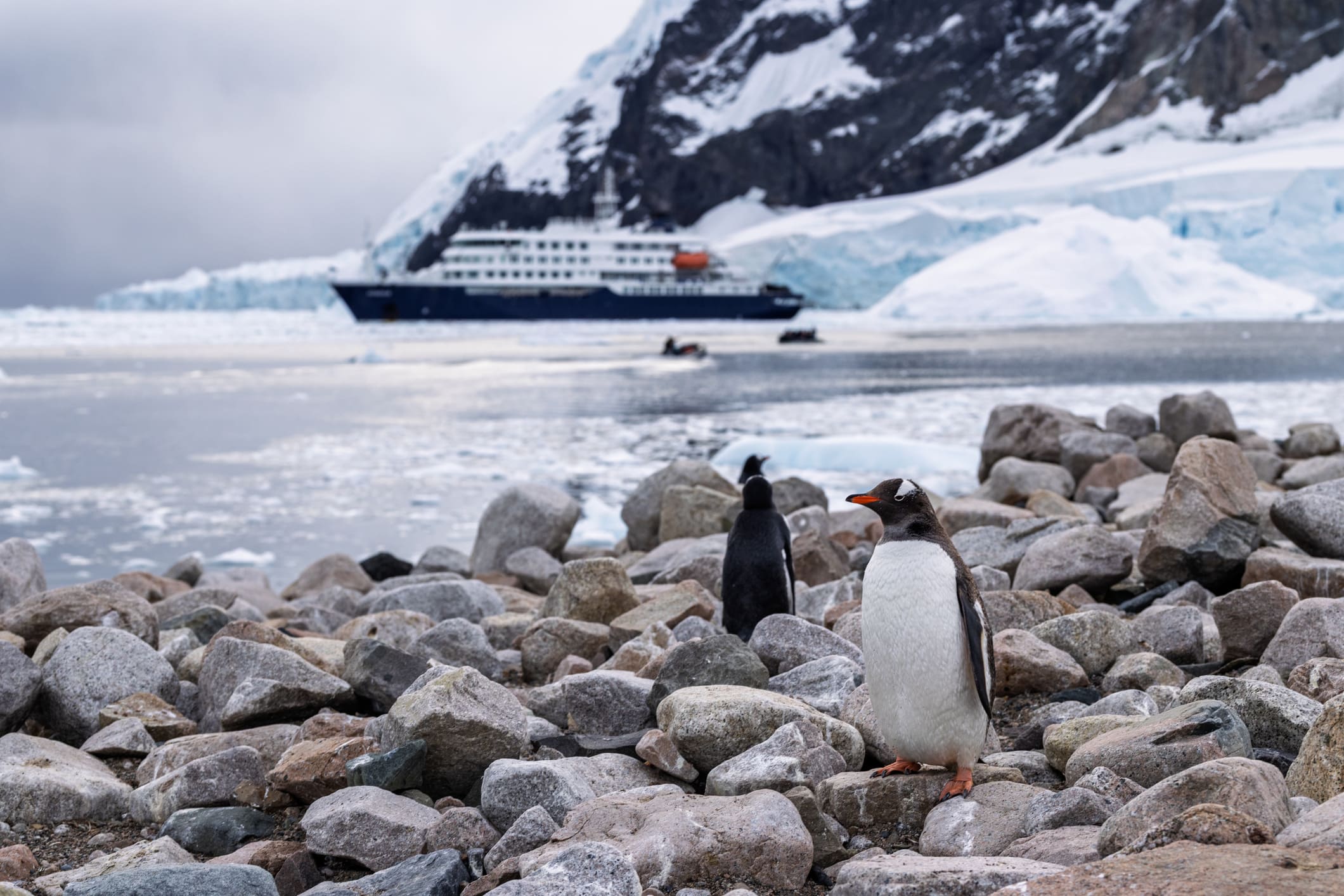
In the Arctic itself, the vast environmental changes we are seeing are having a direct impact on the daily lives of wildlife. Animals that inhabit this region and rely on easy access to snow and ice are suffering. Polar bear, walrus and seal populations, to name just a few, are declining as the ice they once used for hunting, breeding, nursing and resting melts away around them. In fact, the British Antarctic Survey found that one species of seal has declined by 54% since 1977. However, this represents only a small fraction of the species facing adversity as a result of global warming.
Not only that, but these changes are also causing hardship for Indigenous peoples who live in the region. With many communities relying heavily on marine species for food, it’s easy to imagine the consequences of declining wildlife populations.
Melting ice is also contributing to rising sea levels and disrupting ocean ecosystems. As majestic looking ice sheets and glaciers melt, they dump vast volumes of freshwater into the oceans.
Shipping is a critical source
Black carbon is one of the most immediate and damaging climate pollutants because, unlike CO₂, it has a powerful warming effect over a very short period. In the Arctic, black carbon from ships’ incomplete combustion settles on snow and ice, darkening the surface. This reduces the albedo effect, in other words, the surface’s ability to reflect sunlight, causing the ice to absorb more heat and melt more quickly.
This increased ice loss contributes to rising temperatures, changing weather patterns and ecosystem disruption, extending far further than polar regions. In fact, new data from the Clean Arctic Alliance, covering 2019 to 2024, shows that black carbon emissions from shipping in Polar Code Arctic waters almost tripled over that period, rising from 259 to 759 metric tonnes.
Given this is something I’m so passionate about, I frequently have conversations with other industry leaders about this very topic. I often find there are three things that surprise people most about particulate matter (PM) and black carbon emissions:
First: exposure to particulate matter and black carbon contributes to millions of premature deaths each year through respiratory and cardiovascular diseases
Second: their climate impact can be disproportionately large. Although they’re emitted in far smaller quantities than greenhouse gases, black carbon is one of the most powerful short-lived climate pollutants
Third: reducing these emissions can deliver rapid results, improving air quality and public health almost immediately while also slowing warming, particularly in sensitive regions such as the Arctic, where black carbon is speeding up ice and snow melt
It’s easy to think that, given this information, we would already have legal measures in place to reduce the use of fuels that cause such devastating harm.
Current conditions
According to the Clean Arctic Alliance, discussions at the International Maritime Organization (IMO) have been taking place for years. In 2007, a paper recognising black carbon as a potent climate forcer was submitted to the IMO’s Marine Environment Protection Committee. In 2011, the committee agreed a work plan to investigate measuring and controlling black carbon emissions from ships.
At the IMO's Pollution Prevention and Response Sub-Committee, there have been positive signs of support for the development of the "polar fuels" concept. The Clean Arctic Alliance describes “polar fuels” as existing marine fuels that result in lower emissions of black carbon – a potent climate forcer that is also responsible for serious health impacts – when used by international shipping in polar regions.
The proposed IMO polar fuel measure would require ships operating in polar regions to switch to cleaner fuels. The proposal, now co-sponsored by Denmark, Germany, France and the Solomon Islands, would require ships operating in polar regions to use cleaner distillate fuels such as marine gas oil (MGO), as well as low and zero-carbon alternatives as they become commercially available. Critically, it would prevent the continued use of ultra-low sulphur fuel oils or heavy residual fuels with exhaust scrubbers, which comply with existing sulphur rules but continue to produce significant black carbon emissions. While LNG would remain an option, concerns persist over its methane emissions, which carry a significantly greater short-term warming effect than CO₂.
However, whilst regulation looks to be coming at some point down the road, full commitment is still lacking.
There are two recent measures represent notable progress. One is an IMO ban on the use of heavy fuel oil in Arctic waters entered into force in August 2024, primarily to reduce the risk of devastating oil spills in fragile ecosystems. And in April 2026, the IMO's 84th Marine Environment Protection Committee adopted a new Emission Control Area covering the North-East Atlantic which is a significant step for sulphur and nitrogen oxide reduction, with a secondary benefit for some particulate emissions.
But neither measure was designed to address black carbon directly. Despite years of discussion, there are currently no enforceable regulations in place that directly restrict black carbon emissions from ships operating in the Arctic.
What can shipping operators do today?
Whilst the industry prepares for future fuel regulations, ship owners already have the opportunity to make meaningful changes today. However, widespread adoption will depend on solutions that can be implemented quickly, cost-effectively and with minimal disruption to operations.
Shipping companies are currently facing significant hurdles, including fuel availability, infrastructure limitations, regulatory uncertainty and the need to demonstrate a clear return on investment. As a result, there’s growing pressure to identify practical solutions that can deliver measurable environmental benefits now, while supporting the industry's longer-term transition to cleaner fuels.
This is where I feel a genuine sense of pride leading Sulnox. Our product, Sulnox Eco, is a patented, organic fuel conditioner that improves combustion efficiency in all liquid hydrocarbon fuels, including marine fuels - reducing fuel consumption, lowering emissions and protecting engine condition.
We’re trusted by big industry names such as Eastern Pacific Shipping and Crystal Cruises and it’s incredible to see the impact we’re able to make to their operations and sustainability targets.
So, for shipping operators who want to reduce black carbon emissions ahead of regulation, practical solutions are available today.
And for those who want to support the broader regulatory push, the Clean Arctic Alliance is calling on IMO member states to back the polar fuels measure ahead of MEPC 85, scheduled for December 2026. More information at cleanarctic.org.
Our future is in our hands
The Arctic may feel remote to many of us, but its future is closely connected to our own. Looking back to the environmental issues that first captured my attention as a geography student more than 30 years ago, it's striking how many of those concerns have become the reality we're all facing today.
The choices we make now (whether through policy, technology or industry action) will help determine how quickly these changes continue. Protecting the Arctic is crucial if we want to support life and livelihoods around the world.
More Perspectives
All Perspectives